The era of cheap solid-state storage is over — at least for now. If you have priced an SSD recently, you may have noticed that a 2TB NVMe drive that sold for $120–$150 in 2024 now routinely lists at $300 or more. A Kingston executive publicly stated in late 2025 that NAND flash prices had surged 246% since the start of that year alone, with 70% of that increase occurring within a 60-day window. A single enterprise-grade 30TB SSD reportedly saw its price spike by more than 470% between Q2 2025 and Q1 2026.
These are not minor fluctuations. This is a structural shift affecting every organization that relies on SSD-based storage — from IT departments refreshing hardware to businesses running NAS arrays, RAID configurations, and workstations. Understanding what is driving these increases helps you plan storage purchases and, equally important, understand why recovering data from existing SSDs before or after a solid state drive failure is a priority you cannot afford to defer.
The Foundation: What Goes Into an SSD
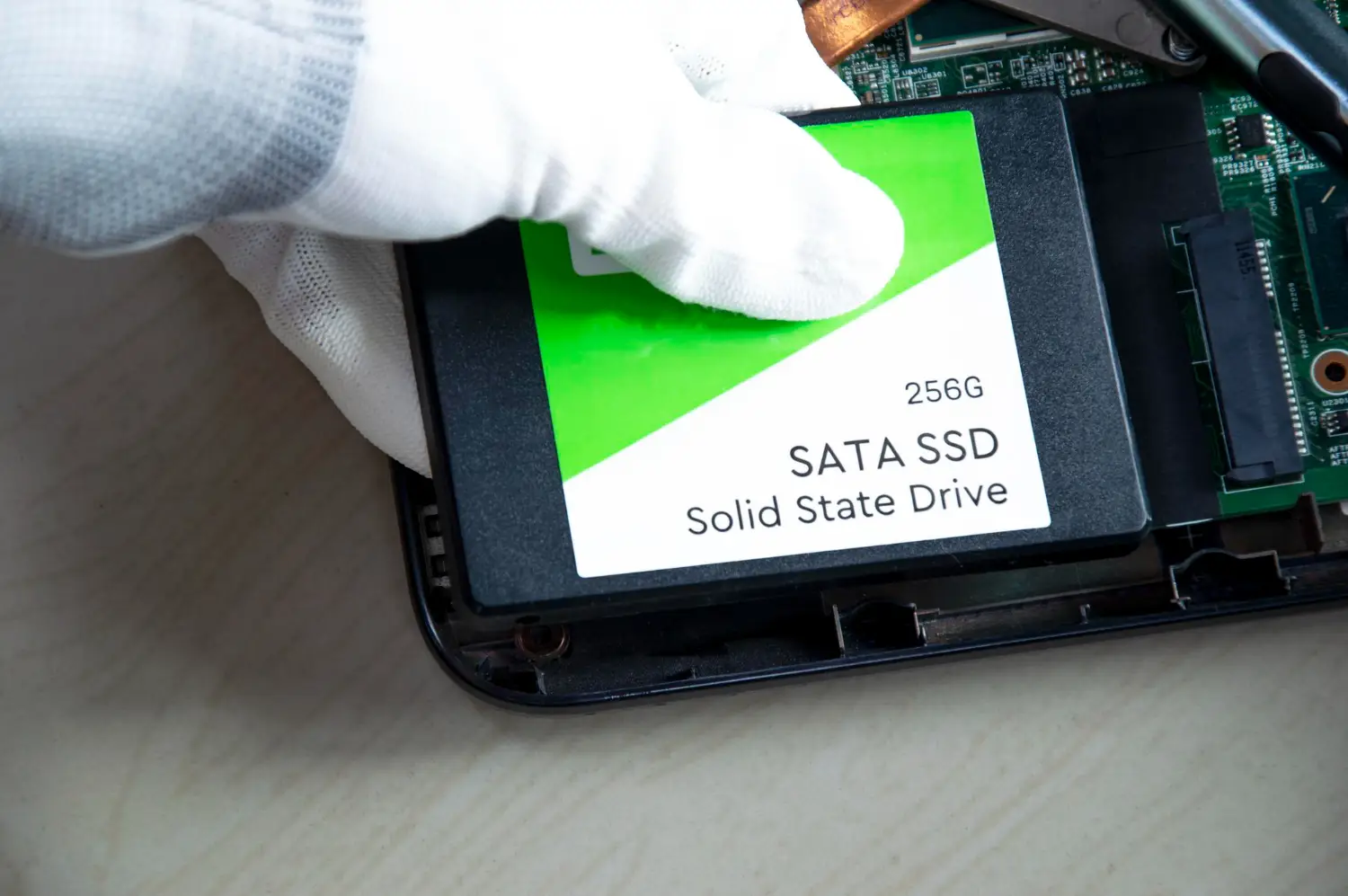
Every SSD is built around NAND flash memory — the chips that store data without power. Roughly 90% of an SSD’s bill of materials is NAND flash. That means any movement in the raw NAND market translates almost directly into the retail price of the finished drive. The world’s NAND production is dominated by a small number of manufacturers: Samsung, SK Hynix, Micron, Kioxia (formerly Toshiba Memory), and Western Digital. This concentration means the decisions of a few companies and the pressures on a handful of supply chains shape prices globally.
Factor 1: AI Infrastructure Is Consuming NAND at an Unprecedented Rate
The single largest force pushing prices upward is demand from AI data centers. Training and running large language models requires enormous amounts of high-speed storage for model weights, training datasets, checkpoints, and inference pipelines. Hyperscalers — Microsoft Azure, Amazon AWS, Google Cloud, Meta — have been expanding storage capacity at a pace that was not anticipated even two years ago.
Goldman Sachs forecasts that global data center power demand will grow 50% by 2027 and up to 165% by the end of the decade. That power demand directly correlates with the compute and storage hardware filling those facilities. The flash storage market, valued at roughly $62.4 billion in 2024, is projected to surpass $68.9 billion in 2025.
Crucially, the NAND required for AI infrastructure — high-capacity, enterprise-grade QLC and PCIe Gen5 drives — competes with the same wafer supply that produces consumer SSDs. When hyperscalers absorb production at the high end, less capacity flows down to the rest of the market. Organizations that experience SSD data loss in this environment face both a data recovery challenge and a costly replacement decision.
Factor 2: Manufacturers Are Deliberately Cutting Supply
In 2024, NAND manufacturers were grappling with the opposite problem: oversupply had driven prices down, and companies were losing money. In response, Samsung, SK Hynix, and Micron each implemented production cuts ranging from 10% to 25% of wafer starts. The goal was to drain inventory and restore margins.
By late 2025, those production cuts were working — perhaps too well. SK Hynix announced it would reduce NAND output from approximately 1.9 million wafers in 2025 to 1.7 million in 2026 (a further 10% cut) even as demand accelerated. Micron similarly implemented a 10% reduction in wafer starts.
This is a deliberate business decision: manufacturers are prioritizing profitability over volume, and they are replacing long-term supply contracts with shorter-term arrangements that allow them to reprice more frequently. The result is a supply-constrained market where rising demand hits a wall of intentionally limited output.
Factor 3: The Shift Toward High-Bandwidth Memory Is Pulling Capacity Away From SSD Production
AI does not just consume NAND flash. It also consumes High Bandwidth Memory (HBM) — the stacked DRAM used directly on AI accelerator chips like Nvidia’s H100 and H200. Samsung, SK Hynix, and Micron are all redirecting wafer fabrication capacity toward HBM production because the margins on HBM are substantially higher than on consumer or enterprise SSD NAND.
The practical effect is that DRAM and NAND production compete for the same cleanroom capacity and the same capital expenditure budgets. As manufacturers pour resources into HBM to service AI chip demand, the capacity available for mainstream NAND shrinks. This dynamic amplifies the supply squeeze already caused by deliberate production cuts — and makes recovering data from SSDs already in service all the more important rather than simply replacing failed hardware.
Factor 4: Trade Tariffs Have Added a Layer of Cost Uncertainty
In April 2025, the United States implemented sweeping tariffs on imports from more than 80 countries. The storage industry was directly affected because virtually every SSD — and every piece of NAND flash — originates in East Asia. South Korea (Samsung, SK Hynix), Japan (Kioxia), and China (packaging and assembly for numerous brands) all fell under the tariff framework.
While the US and China subsequently agreed to a 90-day tariff suspension in May 2025, and a longer truce beginning November 2025, uncertainty has remained a persistent cost factor. Importers have priced in risk premiums. Manufacturers sourcing components across multiple tariff-exposed geographies have seen their input costs rise, and those increases pass through to distributors and end customers.
For Canadian businesses, the tariff situation has a secondary effect: US-based distribution channels, which supply a significant portion of Canadian retail and enterprise storage, are absorbing elevated import costs that ripple into Canadian pricing. This makes professional data recovery in Canada a cost-effective alternative when a drive fails — avoiding the full replacement cost while keeping data within Canadian jurisdiction.
Factor 5: HDD Supply Constraints Are Pushing Demand Toward SSD Storage
Hard disk drive production has also tightened, partly due to the same AI infrastructure spending wave and partly due to ongoing consolidation among HDD manufacturers. When organizations cannot source HDD capacity at expected prices, some workloads shift to SSD-based storage — adding further demand pressure to an already stretched NAND market.
The analysts at Gamer’s Nexus described the situation as “the surge in NAND flash demand is structural, not temporary,” pointing to AI storage needs and HDD supply constraints as reinforcing each other in a way that is unlikely to resolve quickly. For businesses running mixed storage environments, an SSD failure now carries a higher replacement cost — making prompt action at the first signs of SSD data loss critical.
What the Numbers Look Like in Practice
To put the pricing movement in concrete terms:
- A 2TB NVMe SSD that averaged $120–$150 through much of 2024 now commonly retails at $300–$480.
- A 1TB budget NVMe SSD (such as the Kingston NV3) has roughly doubled in price from approximately $80 to $160 or more.
- NAND wafer costs, per Kingston’s public statement, increased 246% from Q1 2025 to late 2025.
- Enterprise server SSD prices were up over 10% in Q4 2025 alone, on top of increases earlier in the year.
- The global SSD market was valued at over $40 billion in 2024 and is projected to reach $55.73 billion in 2025 — growth driven not by falling prices and expanding volume, but by rising prices against constrained supply.
Industry analysts broadly expect prices to remain elevated through 2026, with no near-term catalyst for a significant reversal given ongoing AI demand and the production strategies of major manufacturers.
What Rising SSD Costs Mean for Organizations
Rising SSD prices have two practical implications for IT managers and business decision-makers.
First, hardware refresh cycles become more expensive. If your organization had budgeted for storage upgrades based on 2023 or 2024 pricing, those budgets may now be 50–100% short of what the same hardware actually costs. Procurement timelines and cost models need to be updated to reflect current market conditions.
Second, the value of data on existing drives increases relative to replacement cost. When a new 2TB drive costs $400 instead of $130, the business case for professional SSD data recovery strengthens considerably. A solid state drive failure that once led to a cheap swap now means paying significantly more for new hardware — and that is before accounting for the irreplaceable nature of the data itself. Recovering data from an SSD that has failed or been accidentally deleted is often far less expensive than buying a replacement at today’s prices.
This applies equally to individual drives and to RAID arrays. If a member drive in a multi-drive array fails and you are facing current SSD prices for a replacement, the cost calculus for recovery versus replacement shifts decisively toward SSD data recovery services.
Protecting What You Already Have
The best response to expensive hardware is to make what you have last as long as possible — and to protect the data on it before a solid state drive failure occurs.
That means:
- Maintaining verified backups on a separate medium and location, not just a second partition on the same drive. SSD data loss from a failed backup strategy is unrecoverable by any means.
- Monitoring drive health through manufacturer utilities or SMART data tools, and acting on early warning indicators before they escalate to full SSD failure.
- Not delaying recovery when a drive begins showing symptoms. An SSD that is read-only, intermittently inaccessible, or producing errors is often recoverable if addressed quickly. Continued use after early failure signs reduces the chances of successful SSD data recovery.
If a drive does fail, NAND flash data recovery is a specialized process that requires proprietary hardware and firmware-level tools — it is not something standard IT tools or consumer software can reliably handle. TeraDrive’s success rate on SSD data recovery exceeds 96%, using proprietary tools alongside industry-standard platforms. All recovery work is done in-house at our Langley facility, with no data transmitted over the internet and client devices never connected to external networks.
What to Expect Going Forward
The NAND market does not move in one direction indefinitely. Production cuts reduce inventory; lower inventory eventually tightens supply enough that manufacturers begin ramping output again. TrendForce noted that NAND prices were showing signs of stabilizing in Q2 2025 before the next wave of AI-driven demand and tariff uncertainty pushed them higher again through late 2025 and into 2026.
The most credible analyst forecasts suggest prices will remain elevated through most of 2026 before any meaningful correction, assuming AI infrastructure spending continues at its current pace and manufacturers maintain their production discipline. Canadian buyers should also factor in currency and import costs beyond the base NAND price. In the meantime, investing in data recovery Canada-wide is a more cost-effective hedge than hoping replacement hardware prices will fall quickly.
Conclusion
The SSD price surge is the result of several forces converging simultaneously: AI infrastructure demand pulling NAND supply toward data centers, deliberate manufacturer production cuts designed to protect margins, a strategic shift of wafer capacity toward high-bandwidth memory, and trade tariff uncertainty adding cost pressure throughout the supply chain.
For businesses that depend on SSD storage, the immediate practical steps are clear: update procurement budgets, treat existing drives with care, and ensure you have verified backup coverage. When SSD data loss does occur — whether from a solid state drive failure, accidental deletion, firmware corruption, or electrical damage — professional SSD data recovery services are often far more cost-effective than purchasing a replacement at today’s elevated prices.
If you are dealing with a failed SSD, an SSD failure in a RAID array, or are concerned about data on an aging drive, contact TeraDrive for a free diagnostic assessment. Our team provides professional SSD data recovery services across Canada, working with all drive types — NVMe PCIe, M.2 SATA, and enterprise U.2 — using both proprietary recovery hardware and specialized tools to achieve the highest possible recovery rate without putting your data at risk.
Reach us at 604-800-9060 or through www.teradrive.ca.
Sources: Kingston Technology public statements (December 2025); TrendForce NAND market reports (2025); Tom’s Hardware storage market analysis; DropReference SSD pricing data; PC Gamer NAND coverage; Goldman Sachs data center power demand research; TechPowerUp NAND revenue reporting; Secure Data Recovery tariff analysis; Coherent Market Insights NAND Flash Memory Market report.